1902 Coal Strike
Roosevelt wrote, “on occasion great national crisis arise which calls for vigorous and immediate action and that in such cases it’s the duty of the president to act on the theory that he is the steward of the people and that the proper attitude for him to take is that he is bound to assume that he has the legal right to do whatever the needs of the people demand unless the constitution and the laws explicitly prevent him from doing it.”
In 1910, after his presidency, he said his theory of Stewardship was best illustrated in times of crisis like during the 1902 Anthracite Coal Strike.
Roosevelt's involvement in the strike came after Henry Cabot Lodge wrote TR and said if he didn't do something about the coal problem the party was going to lose badly in the mid-term elections.
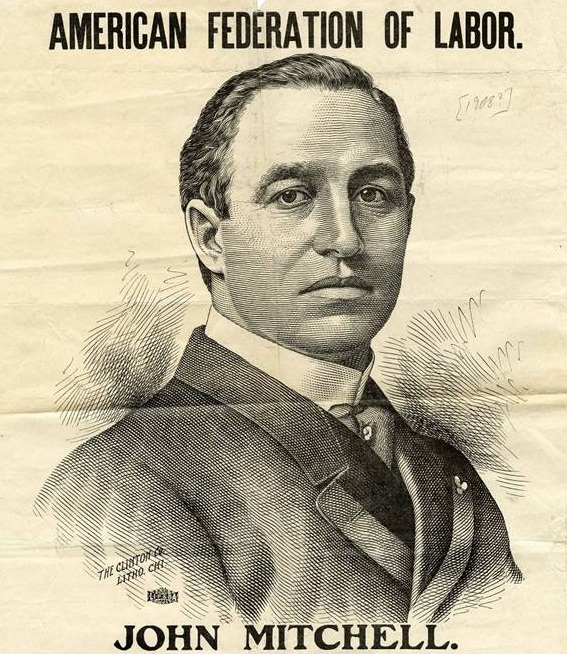
On Friday, October 3, 1902, TR met with the mine owners and Johnny Mitchell head of the United Mine Workers. The conference was held in the temporary White House at 22 Lafayette Place while the west wing was being built. Roosevelt was still in a wheelchair recovering from his Pittsfield trolley accident. Mitchell seemed calm and willing to reach an agreement. On the other hand, the mine barons called Mitchel an extremist who had 21 people killed and used violence to prevent over 20,000 workers from entering the mines.
There was no mistake they hated Mitchell and the union. The meeting ended in failure, but in true TR style he had a stenographer in the room recording the conservation. He sent the transcript to the printing office who distributed it to the press turning public opinion against the owners. Roosevelt then went one step further threatening to send in the military and nationalize the mines.
Elihu Root had been a distinguished corporate lawyer and knew J. P. Morgan. Sensing disaster Root convinced TR to allow him to visit Morgan to try and hammer out a deal.
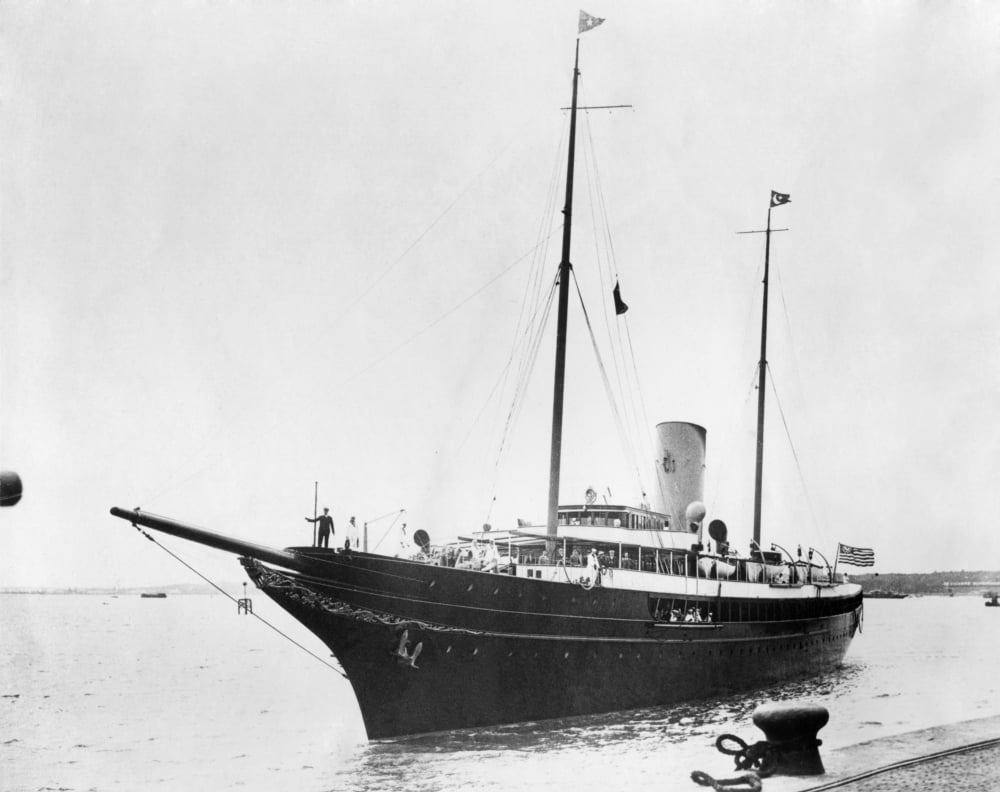
Morgan’s involvement with the Reading Railroad and the Pennsylvania Coal Mines made him a good negotiating influence. The two met October 11th in New York Harbor onboard Morgan’s yacht Corsair.
After 5 hours of negotiation, they drafted a proposal that with pressure from J. P. Morgan wound up acceptable to both parties. Miners wanted to shorten their 10-hour workday to 8 hours but accepted 9. Instead of demanding a 20% raise they agreed to 10%. In accepting binding arbitration, the owners could raise prices 12%.
TR was convinced the impending disaster was averted when labor and industry understood as president, he had the moral high ground and authority to intervene on behalf of the public in the same way Lincoln acted during the Civil War. Lincoln said there were times he went beyond the scope of the constitution because he swore an oath to uphold the constitution. He knew the constitution wouldn’t survive if he didn’t do those things needed to prevent losing the war.
TR believed you needed a constitution, but that the constitution wasn’t as important as the people. In crisis the public was better served by the immediacy of executive order rather than what he called narrow constitutional law over “Ethical Law.” He wrote, “the great public had vital interests and overshadowing rights." TR believed a cold winter and the threat of street violence matched the crisis Lincoln faced during the unrest of the Civil War.
TR was bringing a new approach to government that went far beyond the Founding Father’s view of Constitutionalism.