
Theodore Roosevelt and John Paul Jones
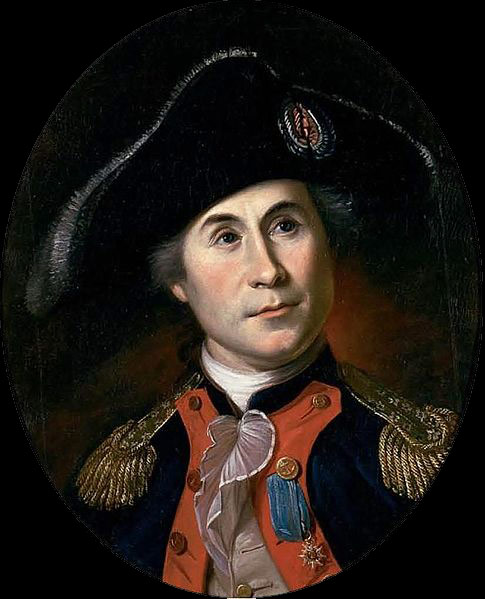
John Paul Jones, “The Father of the American Navy”’ died in poverty in 1792 during the French Revolution. He was 45 and died of Bright’s disease; the same illness that took the life of TR’s first wife Alice Hathaway Lee. A friend paid for the funeral. He was buried in St. Louis Cemetery in France and was soon forgotten.
Over a 100 years later, a search started to find John Paul Jones for the purpose of bringing him home to the United States. After weeks of searching the casket was found and disinterred. Remarkably, Jones corpse, sealed in a lead casket, was nearly perfectly preserved.
He was taken to the University of Paris where they did a complete autopsy. His head was compared to a sculpture of Jones done in 1780 by Jean Antoine Houdon. Houdon did the statue of Washington in the Capital at Richmond. In that statue the face is Washington's, but the body is Founding Father and penman of the Constitution Gouverneur Morris. Washington was pear shaped and Houdon thought Morris looked more heroic.
The body was transferred from Paris to Cherbourg where TR had the USS Brooklyn waiting. It arrived in Maryland July 1905 and placed in a temporary vault across the street from the new Naval Academy Chapel that was under construction.
On April 24, 1906, an elaborate ceremony was held in Dahlgren Hall where Roosevelt delivered the keynote address. In his remarks TR highlighted Jones’ bravery and his famous "I have not yet begun to fight!" reply to a surrender demand as his ship sank. He then transferred his crew to the captured HMS Serapas; fought on and won the day in the Battle of Flamborough Head on September 23, 1779.
TR went on to stress the importance of naval valor, diligent training and preparation and compared John Paul Jones aggressive naval philosophy to that of his own. He spoke of his vision of a powerful, global U.S. fleet. TR urged cadets and officers to live up to the ideals of grit and readiness as personified by Jones. Today the John Paul Jones casket rests in its tomb in the Naval Chapel at Annapolis.