
TR and Nullification
At the 1912 Progressive Nominating Convention TR announced, “we stand at Armageddon and we battle for the Lord.” For Roosevelt the campaign was a crusade.
One of the first things on his agenda was to go after the courts. Roosevelt argued a single judge could declare the Constitution to mean whatever they wanted preventing the absolute right of the people to rule themselves.
He proposed citizens should have the ability to recall judges and nullify decisions. .
Ever since John Marshall's 1803 Marbury vs. Madison opinion the Supreme Court has had the final say when interpreting the Constitution.
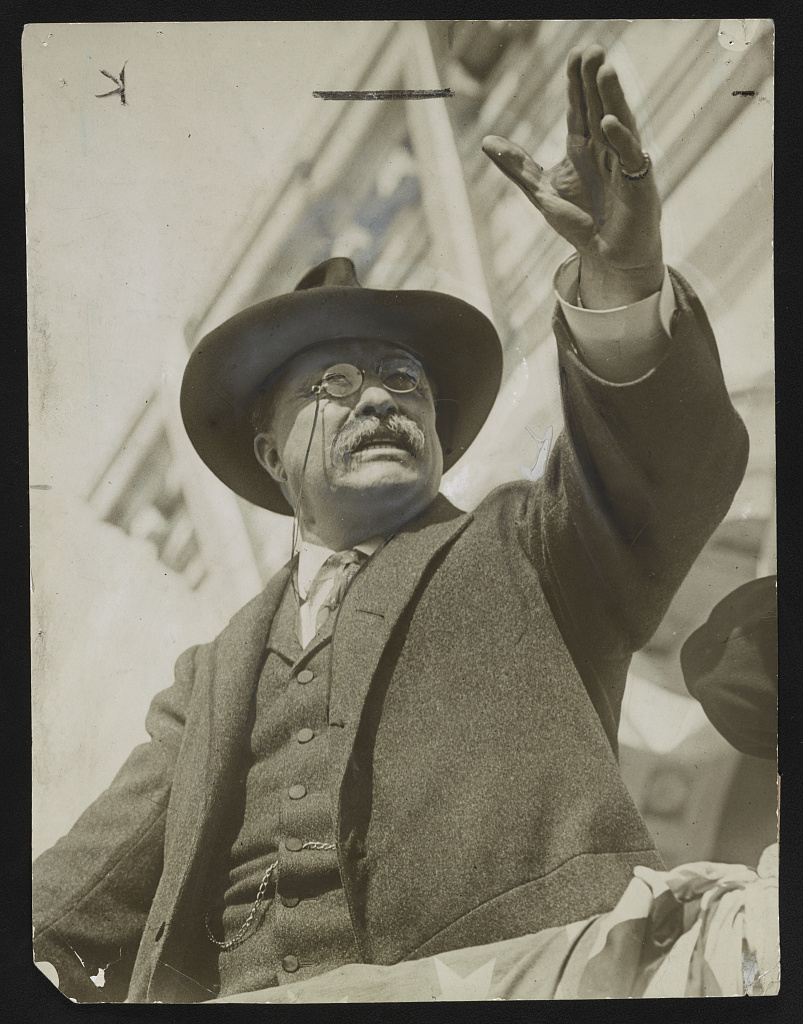
TR believed the power to decide constitutional questions should go through the political process he thought was central to our system of government. What the government could, or couldn’t do should be decided in state and federal congressional debate and at the ballot box.
Roosevelt saw the Supreme Court judges violating the sovereignty of the American people. He pointed to the infamous March 6, 1857 Dred Scott decision that was decided by a court dominated by southern pro-slavery judges. Seven judges had been appointed by pro-slavery Presidents. Five came from slave-holding families.
Chief Justice Roger B. Taney ruled that African Americans whether free or enslaved were not citizens of the United States. Taney believed the phrase in the Declaration of Independence that “all men were created equal” was never intended to apply to blacks.
Under the Dred Scott decision blacks couldn’t vote, travel, fall in love or marry of their own free will. The decision went a step further declaring laws restricting slavery in new states or sought to keep a balance between free and slave states making Henry Clay's 1820 Missouri Compromise unconstitutional.
In essence, Black Americans regardless of where they lived were believed to be nothing more than commodities. The decision became known as “The victory for Southern “Slavocracy.”
Roosevelt and Lincoln agreed the people should go against judges when "judges went wrong.” In his first inaugural address Lincoln argued, “if it’s the policy of the Government, upon vital questions affecting the whole people, is to be irrevocably fixed by decisions of the Supreme Court . . . the people will have ceased to be their own rulers.”
It’s uncertain Lincoln or Roosevelt had the foresight to predict how judicial decision's would reshape American society.
However, it is certain Lincoln and Roosevelt's concern of judicial supremacy would eventually go on to fundamentally compromise the power of the American people to control their own destiny and forever consign themselves to hope for timely judicial vacancies.
