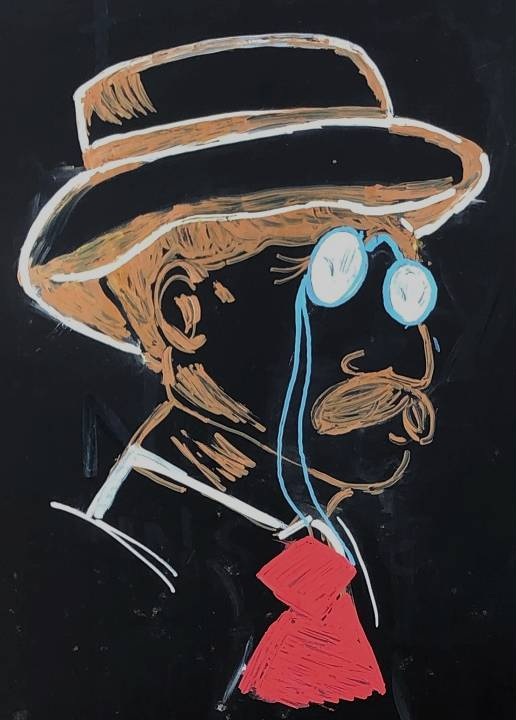
Theodore Roosevelt Jr.
Theodore (Ted) Jr. was born September 13, 1887 and was the first child born to Theodore and Edith. He was brother to Alice, Kermit, Ethel, Archibald, and Quentin.
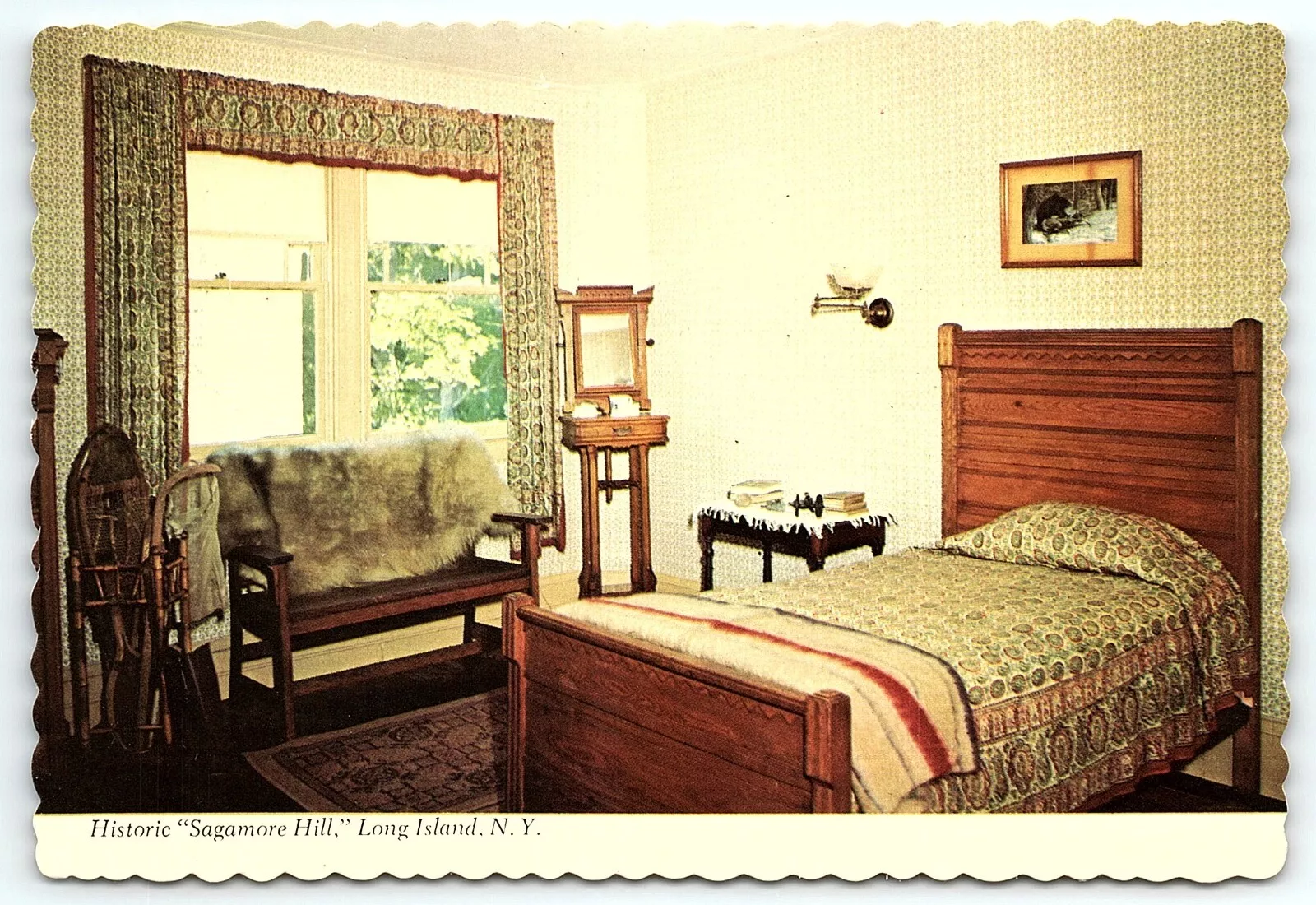
Being his father’s namesake did not come lightly and throughout his youth, Ted was pushed by both his father and the reputation of his father’s name. Ted was the first born at the family estate at Sagamore Hill in Oyster Bay, NY. Like all the Roosevelt children, Ted was greatly influenced by his father, but built his own impressive life, especially in terms of his military career.
Throughout his youth, Ted was educated in both public and private schools including the prestigious Groton School in Massachusetts. While attending school, his father would write him letters encouraging Ted to push himself, especially in sports and specifically in football. As time came for him to choose a university, Ted looked towards West Point or Annapolis in pursuit of a military career, while his father preferred Ted attended his own alma mater, Harvard University, and serve his country in the military as a volunteer if the need arose.
Ted chose Harvard over a military school and found success upon graduation in banking and business. He married Eleanor Alexander in 1910 and they settled close to Sagamore Hill. Still interested in serving in the military, he found his initial opportunity to serve during World War I. In 1915, he joined a camp in Plattsburgh, New York which prepared young men for war as officers. Doing his best to “practice what father preaches,” as his youngest sibling Quentin put it, Ted was commissioned along with his brother Archibald, to serve as officers in June 1917.
Ted’s initial post was in France and about a month after he traveled there, his wife Eleanor followed him to work with the YMCA. Her presence and their Parisian home became a respite for Ted, Archie, Quentin, and Ethel’s husband Dr. Richard Derby as they were all sent overseas. This was especially important because at one point during the conflict, Ted had been shot in the leg and it was Dr. Derby’s care that saved both his leg as well as his life. During his service in World War I he received the Croix de Guerre among other medals.
After returning home, Ted and Eleanor continued to make a name for themselves. Ted, following in his father’s footsteps, decided to run for political office in New York State. In 1919, he was elected to the New York Assembly and in 1924 was the Republican nominee but lost the race for New York Governor. He was appointed as the Assistant Secretary of the Navy in 1921 as a part of the Harding administration. In 1929, he served as Governor of Puerto Rico and by 1932 he was appointed as the Governor General of the Philippines.
In 1938 he built a residence at Sagamore Hill on 5 acres of an apple orchard that he purchased from his mother. He and his wife, along with his children Grace, Theodore IV, Cornelius, and Quentin II spent many summers here. In 1960 his wife donated the estate to the National Park Service, and it is now known as the Theodore Roosevelt Museum at Old Orchard at Sagamore Hill.
Ted Jr’s final act of service came in World War II, where he reached his highest military rank of Brigadier General. He served under General George S. Patton in the African theatre and was later reassigned to the western front. Ted was 56 years old when he famously became the highest ranking officer on the beaches during the Invasion of Normandy, personally escorting soldiers on Utah beach under heavy fire.
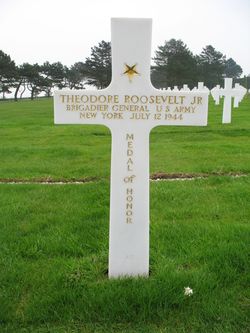
Ted Jr. suffered a heart attack and died less than 5 weeks later on July 12, 1944. For his bravery and service at Normandy, Ted was posthumously awarded the Medal of Honor. TedJr. is buried in the Normandy American Cemetery.
Military Service
Theodore Roosevelt Jr., who had been shot in the leg and gassed nearly to blindness in World War I and in part treat by Richard Derby Ethel's husband, made sure he, was not going to let World War II go by without his direct involvement.
He would land on the first wave. He was 56 and walked with a cane when his Higgins Boat reached Utah Beach on June 6, 1944.
Prior to U.S. entry in World War I, he helped form American Legion, Inc., a national network of citizens trained to serve should the call to arms come. He led combat missions across France and soon after the armistice of Nov. 11, 1918, arranged the earliest meetings to plan what would become The American Legion.
In May 1919, he presided over the St. Louis Caucus where the Preamble to the American Legion Constitution was drafted and most of the organization’s purposes and values were set in motion.
Like many of The American Legion’s earliest founders, Roosevelt Jr. returned to duty during World War II. He was a well-respected leader, considered a “dog-faced general” by his troops.
Ted Jr's. verbal request to join the amphibious landing at Nitmandy was originally rejected by Maj. Gen. Raymond “Tubby” Barton. In a written request he stated his experience and ability to report the situation from the beach back to command would be vital to the operation’s success. He also noted that, “I personally know both the officers and men of these advance units and believe that it will steady them to know that I am with them.” Reluctantly, Barton finally gave in.
Ted Jr. was the only U.S. general to storm the beaches in the first wave of the Normandy invasion, leading the 4th Infantry Division, 8th Infantry Regiment, into France. His landing craft famously drifted off course and reached shore approximately one mile from its target destination on Utah Beach. Reportedly, he let the troops know he didn’t care where they landed. “We’ll start the war from right here!” he is said to have shouted to the young soldiers scrambling onto the beachhead.
As German forces began firing Ted Jr. was reportedly limping back and forth from the beach to the Higgins Boat, armed with only a pistol, keeping the troops moving.
That same morning, Ted Jr.’s son, Capt. Quentin Roosevelt II, stormed Omaha Beach. Theodore Roosevelt Jr. was the oldest man in the invasion and the only father whose son to come ashore on D-Day.
“His valor, courage, and presence in the very front of the attack and his complete unconcern at being under heavy fire inspired the troops to heights of enthusiasm and self-sacrifice,” his Medal of Honor citation would later read. “Although the enemy had the beach under constant direct fire, Brig. Gen. Roosevelt moved from one locality to another, rallying men around him, directed and personally led them against the enemy. Under his seasoned, precise, calm, and unfaltering leadership, assault troops reduced beach strong points and rapidly moved inland with minimum casualties. He thus contributed substantially to the successful establishment of the beachhead in France.”
Once inland, he was often found among the rank-and-file soldiers, seated in his jeep, which bore the name “Rough Riders” in honor of the 1st Cavalry Brigade his father had led in battle during the Spanish American War.
Five weeks after coming ashore at Utah Beach, Theodore Roosevelt Jr., died of a heart attack and was buried in Ste. Mere-Eglise. His grave was later moved to the Normandy American Cemetery near Omaha Beach, where it is often visited by current-day American Legion national commanders.
Theodore Roosevelt Jr's room recreated by Curator Jessica Kraft in 1953 with Alice and Ethel's help Jessica was the last to care for Edith before her death.