
Alexander Hamilton
Alexander Hamilton is often referred to as the Father of American Capitalism. His gravesite at Trinity Church located across from Wall Street is nearly always decorated.
Yet, Alexander Hamilton had little background in economics and seemed less interested in Capitalism and more interested in Mercantilism.
In opposition, Jefferson Republicans preferred Capitalism. Instead of creating an economy based on what Adam Smith called the invisible hand of the free market, Hamilton preferred Britain’s economy driven by the very visible hand of the government.
To the colonies who had just shed blood fighting to gain their freedom from what they saw as the tyranny of British Mercantilism, Hamilton appeared to believe Mercantilism was good if you were in the driver’s seat.
Under Mercantilism the goal was to produce and export more products than you imported in order to accumulate more gold and silver than your rivals.
The object was to bank as much gold and silver as possible. The more gold and silver you had the more power you had. Collecting as much as you could prevented rivals from matching the assets you own.
Mercantilism saw the economy as if it was a pie that was just so big. Each country had its own piece and to get a bigger piece you had to take a slice away from another country.

Under Mercantilism governing countries tried to develop colonies to acquure the natural resources they didn’t have. Those colonies were then only permitted to trade with their governing country. It was exactly what Britain was doing with the American colonies before the revolution.
Self-sufficiency was critical. If you’re going to export more than you import you need an economy that meets all the needs of it’s citizens. The country can’t rely on other countries to provide the products they don’t produce. This tended to favor Imperialism. The sun never sets on England.
The goal of Mercantilism is domestic manufacturing. A country has to produce as many products as they can to avoid any dependency on other countries.
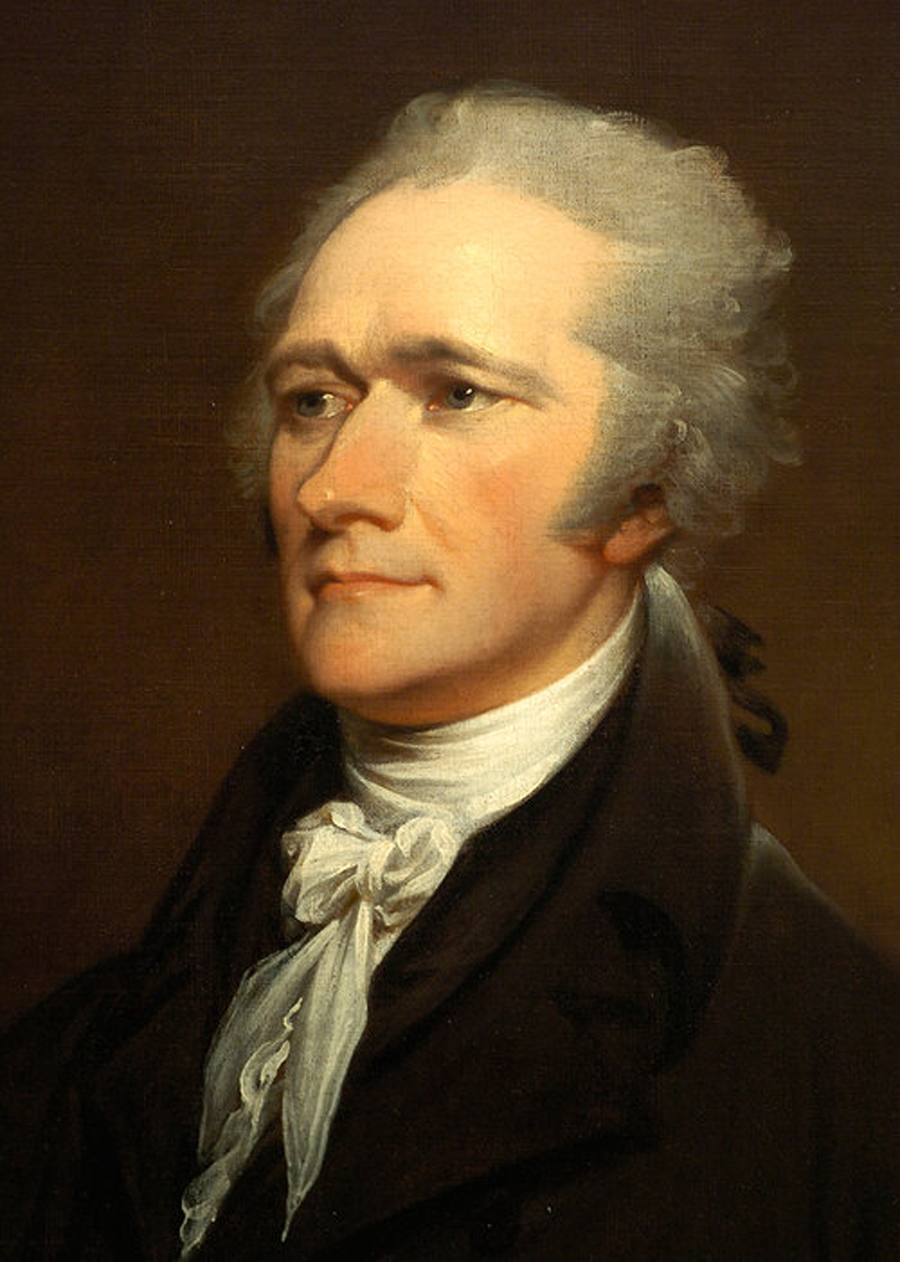
Hamilton was trying to turn America into a one stop shopping colonial Walmart. A place where you could get everything you needed under one roof. Years ago stores like Walmart were called the Mercantile and were commonly found on Main Street, USA. To accomplish that goal, since some countries were better at making some products than others you needed regulation.
Mercantilism needed protectionism. It needed to limit foreign competition and regulate foreign trade. To achieve this objective governments offered incentives that demanded a hands on approach. It required regulations designed to eliminate as much risk as possible.
Hamilton saw Mercantilism as a team sport that required a coach and players to work together. Capitalism was based on the work of individuals. Mercantilism is a government system that ran a much greater risk of corruption where profit could be based on who you knew.
Hamilton wanted a central national bank run by politicians. Nowhere in the constitution does it give the power to the federal government to establish a central bank. Hamilton believes the Federal Government should be hands on when it comes to the economy and that required a central bank. Hamilton creates the notion of implied powers. He says you have read between the lines.
Hamilton wanted to use tariffs to raise revenue to build and protect a manufacturing sector and discourage imports. Jefferson disagreed and said tariffs should only be used to raise government revenue. The government shouldn’t prevent cheaper products from entering the country that would help the consumer. Jefferson argued the only ones who benefited from tariffs were the manufacturers. He saw it as a tax on the consumer.
There was also the issue of war debts. Hamilton wanted the government to take on the debt of the states and have everyone join in and pay the cost of the war. However, states like Virginia had already paid their debt and didn’t want to pay their debt and part of Massachusetts and South Carolina’s debt.
Alexander Hamilton’s educational background began when he first came to the country in 1772. He arrived in Boston and moved to New York. He attended Elizabethtown Academy in New Jersey before entering Columbia in 1773.
At Columbia, before leaving to fight in the Revolutionary War, he studied Latin, Greek, math, history, science, geography, and philosophy. After the war he became a prominent lawyer without a formal degree. There’s no evidence he studied economics at either Elizabethtown Academy or Columbia known as Kings College.
The only existing record of Hamilton’s involvement with economics was when he was 11 working for the import-export business of Beekman & Cruger in the British West Indies. Over the next 4 years his duties included bookkeeping, writing letters, and managing business operations.
Hamilton became Secretary of the Treasury on the strength of a recommendation from his friend Robert Morris, who was also a friend of Washington. Morris was a successful Philadelphia entrepreneur who became known as the financier of the revolution.
Some saw Hamilton as Robert Morris’s waterboy in helping to create the economy. Hamilton was in favor of a central bank like the Bank of England. Money men wanted to buy government bonds and have control of taxation to make sure there was enough money in the treasury to guarantee payment of the bonds. He also believed in a one man permanent presidency. When the Constitutional Convention turned down his ideas in 1787 he walked out.