
Roosevelt and the Federalist Papers
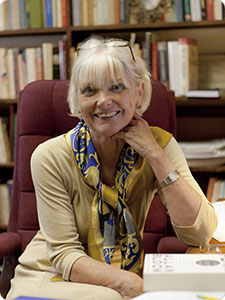
Jean Yarbrough, history professor at Bowden College and author of the book Theodore Roosevelt and the American Political said that while TR urged university students to read the Federalist Papers she saw no evidence he ever read them for himself.
It's an interest twist. TR's philosophy of Presidential Stewardship is based on his interpretation of Article 1 Section 8 of the Constitution that deals with the enumerated powers as they apply to Congress and the country’s general welfare. It is the “Necessary and Proper" Clause (Elastic Clause) defining the scope of federal legislative authority. TR believed that gave government had the right to do whatever was necessary as long as it was proper to do so.
Roosevelt saw how Hamilton used Article 1 Section 8 to convince Washington that a National Bank was Constitutional even though the bank was rejected by the 55 Founding Fathers at the Constitutional Convention. Attorney General Edmund Randolph and Secretary of State Thomas Jefferson argued the power to establish a National Bank wasn’t written into the Constitution and that by its nature made the bank unconstitutional. George Washington eventually sided with Hamilton, but not before the Federalist promised to expand the capital boundaries to 3 miles from Mt. Vernon increasing the value of his property. Once that was settled he signed the bill and the first National Bank was born.
In his autobiography TR draws similarities to his use of presidential authority under Article 1 Section 8 to end the 1902 Coal Strike in the same way Lincoln used what Hamilton called the Implied Powers during the Civil War. Hamilton said the Implied Powers could be found written between the lines of the Constitution. Jefferson said he read between the lines of the constitution, but all he saw was empty space.

TR was as an avid reader. He read a book a day and could polish off three pages every minute. He began his day in the White House reading a book before turning to the work of the country. There's nothing in his character or personality to indicate he'd recommend students read something he hadn’t read for himself. It's even more unlikely when you consider in 1903 he published “Gouverneur Morris the Story of his Life and Work." While the founders left the writing of the Constitution to the Committee of Style and Detail it was really the work of Morris. In the Preamble he wrote “We the People of the United States to form a more perfect Union.” Over the years the Preamble has set the direction of the government. Morris was given the nickname "Penman of the Constitution.” Even though he missed a month, he spoke more at the Constitutional Convention then any other Founding Father.
Morris was the only Founding Father with a clear voice who spoke out against slavery. Morris said if the south doesn’t consider slaves people why should they be counted as people in determining the states level of voting representation and if they’re property why shouldn’t the government count the homes in Philadelphia to determine the level of Pennsylvania’s voting representation.
It was Morris and James Wilson who convinced the convention to accept the electoral College over having congress elect the president that would turn the republic into a parliamentarian form of government.

Morris and Washington were close and in the famous Jean-Antoine Houdon statue of Washington in Richmond the face is Washington's, but the body is Morris. Washington was pear shaped and Houdon thought Morris struck a more heroic figure.
Roosevelt admired Hamilton and Morris was Hamilton's mentor. He'd be at Hamilton's death bed after his duel with Burr.
As much as I admire Jean Yarbrough I think she missed TR's addiction to the written word. He devoured books. He read them in the saddle and could have finished the Federalist Papers in an afternoon.
I don't think the Federalist Papers missed falling under the scrutiny of Theodore Roosevelt. Before Marshall's 1803 Marbury v. Madison decision it was Morris's Preamble that was used to define the three branches of government.
Footnote: Photographers would, from time to time, manipulate a photograph putting the face of a famous heroic figure on the body of someone more physically robust. This is a picture of Abraham Lincoln's face on the body of John C. Calhoun of all people. The photographic slight of hand is the work of Thomas Hicks who was a portrait painter who had earlier painted Lincoln. It's believed it was done right after the Booth Assassination because at the time there were very few “Patriotic” images of Lincoln. Hicks chose the face of Lincoln that’s now on our $5 bill.

