
TR’s Offbeat Politics
Theodore Roosevelt had enormous faith in men he considered the wisest, most fair minded political thinkers in America. He was sure he could count on educated men like Gifford Pinchot to always put the country first and act without self-interest.
Roosevelt was convinced the new challenges of the 20th Century required a much broader application of the Constitution. TR's beliefs differed from those of the Founding Fathers who TR called, “the men of the 18th Century." The Founders were convinced the country was better served by a system of defined checks and balances rather than relying on what they saw as the frailty of human nature.
In TR's view the courts were taking away the rights of the common citizen to “chart their own course.” He attacked judicial decisions he thought were not in the people's best interest and began calling for state and federal judicial review. Roosevelt believed the country didn’t need more judges, it needed more men of bold temperament like Washington, Jackson and Lincoln.

When it came to the economy Roosevelt’s presidency was the most top down command and control administration of any previous presidency. He used the 1906 Hepburn Act to set railroad prices and schedules. Roosevelt considered the Hepburn Act the blueprint to control and regulate private industry.
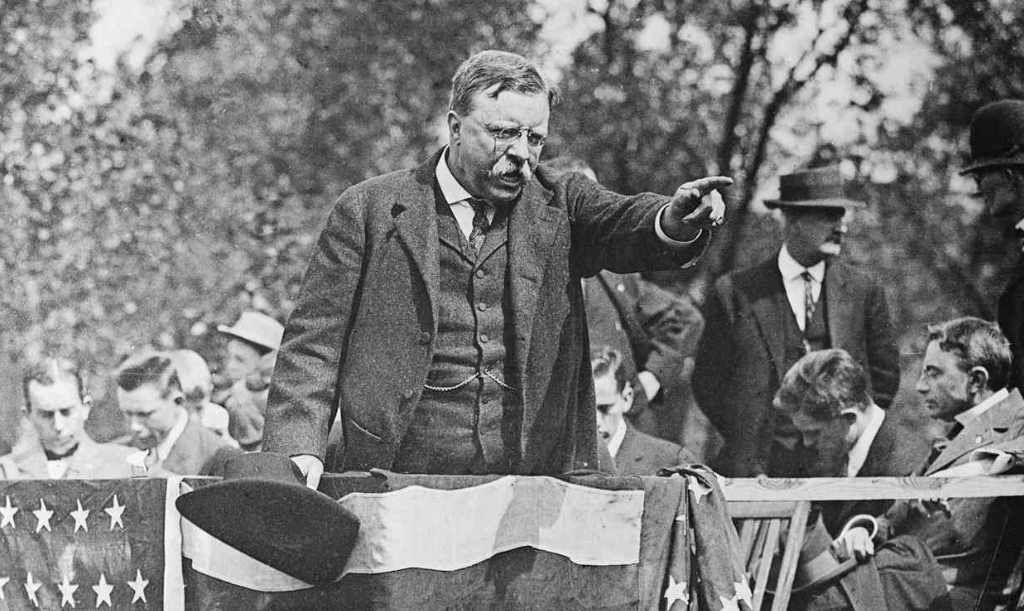
Roosevelt said, “next to war conservation was the one issue he knew he could rely on to excite and mobilize the American people.” By the end of this second term TR was using conservation to limit commercial access to natural resources. Limiting the use of raw materials TR could control the means of production. He expanded the initiative to include “Human Conservation.”
By 1910 TR believed the country had graduated from a period of competition to a period of cooperation. He began to redefine the responsibilities of service to the nation. To Roosevelt service to the nation wasn't charity, it was an obligation of citizenship. It was everyone’s financial responsibility to pay their fair share. In his “New Nationalism” speech that he delivered in Osawatomie, Kansas TR goes as far as to say, “even if you provide service, but are over paid, you don't deserve property ownership.” At that point TR began falling out of step with the American people who were dedicated to the concept of “Life, Liberty and Property.”
By 1912 he was calling for a New Contract with America. In his Bull Moose run for a third term Roosevelt floated the notion if you agreed to give government more power the government would make your life better and bring down the high cost of living. TR’s contract included the power to levy an income tax to pay the tab for everything he promised.

Washington Party was the 1912 Progressive Party