
Roosevelt's Formal Education in History
During his time at Harvard he was not required to read anything about the founding fathers. Nothing about Washington or Lincoln or Alexander Hamilton the father of the Federalist Papers.
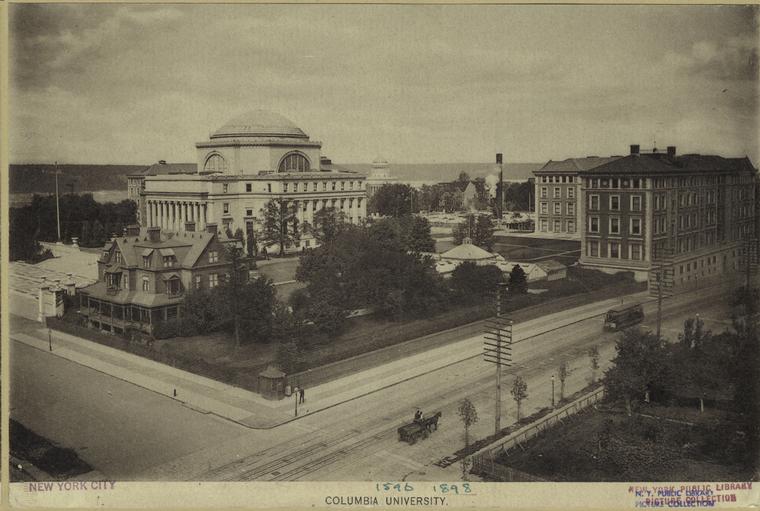
After Harvard he goes to Columbia Law School where he was influenced by John Burgess who admired Bismarck’s 1871 newly unified Germany.
He admired all things German, especially Hagel. Georg Wilhelm Friedrich Hegel was a German philosopher who is widely considered to be one of the most important figures in the development of modern philosophy. His philosophical system, known as Hegelianism, is based on the idea that reality is shaped by the mind and that consciousness is the highest form of reality.
The human mind evolves through a series of stages which represent a new level of understanding. called "moments." they are new forms of consciousness, such as sense-certainty, perception, self-consciousness, reason, and spirit.
Hegel argued that the evolution of consciousness is driven by the dialectical nature of reality, in which opposing forces interact and conflict with one another, leading to the emergence of new forms of understanding. He believed that the world is moving towards a state of absolute freedom and that this process is reflected in the development of history, which he viewed as the product of the evolution of the world spirit.
In his economic theory, Hegel argued that the production and exchange of goods are essential to the evolution of the world spirit and the development of consciousness. He believed that the market should be guided by the principle of fairness and that it should be regulated in a way that promotes the common good.
In his political philosophy, Hegel argued that the state is an expression of the "world spirit" and that it plays a crucial role in the evolution of consciousness. He believed that the state should be organized around the principles of freedom and reason, and that it should be structured in a way that allows individuals to realize their potential and achieve unity with the world around them.
Believed the state has a moral and ethical responsibility to ensure that the needs and rights of all members of society are protected, and that it has a role in promoting the overall well-being and happiness of its citizens
In addition to the state’s role in protecting the rights and promoting the welfare of its citizens, Hegel also believed that the state has a responsibility to ensure the stability and continuity of society.
Hegel's philosophy offers a unique and influential perspective on the nature of reality and the human mind, and it continues to be a fascinating and influential subject of study in the field of philosophy