Roosevelt Out The Window
By Richard Cashman
Some believe a young Theodore Roosevelt can be seen looking down on Abraham Lincoln’s NYC Funeral Procession from a window in his grandfather’s house. It’s a fun story, but is it true?
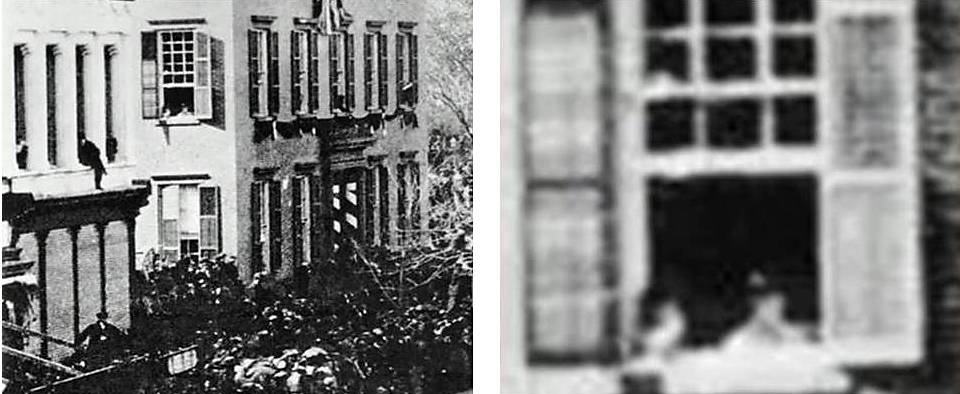
It all starts with this photograph taken of the back of TR’s grandfather’s house. If you look carefully at the picture on the left you can see two images looking out the second floor window. That’s supposed to be Theodore Roosevelt and his brother Elliot. However, when you enlarge the image it doesn’t look anything like a young TR. It could be anyone. It could be a chambermaid with a bun in her hair. The enlarged image on the left is too blurry to identify. At the time of the Lincoln Funeral Procession TR’s grandfather was a Widower sharing the house with his son James, his wife Elizabeth and their 4 children; two boys and two girls. Since they were living in the house the picture could be of any of TR’s nieces or nephews.
Abraham Lincoln was one of TR’s heroes, but during his lifetime he never said he saw his funeral. It isn’t in the Roosevelt Papers at the Library of congress, or in any diary, speech, article or book. He never writes about it in any of his over 150,000 letters and you won’t find it anywhere in the Roosevelt Collection at Harvard. TR got to know Lincoln's only surviving son Robert, but there's no record Roosevelt ever told Robert he saw his father's funeral.

So where does the story come from? It comes from one person and one person only; Theodore Roosevelt’s Widow Edith who on the day the photograph was taken was 3 years, 8 months, 2 weeks and 5 days old.
She was 84 on the day she saw the photograph and not at her best. She had trouble writing sentences and needed help balancing her checkbook. She mistook her grandson for the son she lost shot down over France in WWI. She told him, “You are the first of my babies to die.”
It was apparent Edith’s cognitive decline had gone beyond normal aging. To her doctors and family they saw the decline affecting Edith’s judgment and visual perception. The family hired Jessica Kraft to help Edith manage the house and pay the bills.
Photojournalist Stephan Lorant discovered the photograph in the New York Public Library and wanted to use it in a book. He visited Edith and asked if it was her husband in the window?
Edith took one look and said, “Yes, I think that is my husband and next to him his brother.” She went on to say she was also there, but TR locked her in a back room because she was crying.
Lorant called the picture “The Glorious Burden” and used it in his book, “The Life and Times of Theodore Roosevelt.”
In examining the timeline Edith gave a speech to the Woman's Roosevelt Memorial Association on March 15, 1933. She told the audience she was 4 on the day she met TR. If that’s true Lincoln had been buried long before the two met and everything ends there.
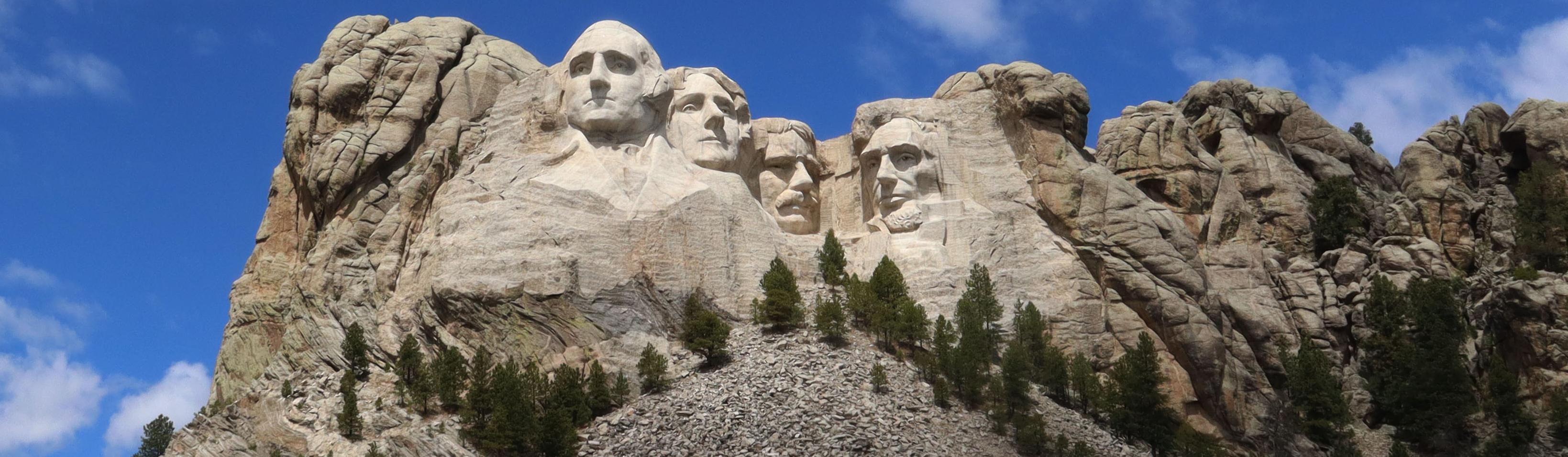
Edith Roosevelt never mentioned the story before, or after seeing the photograph. Years earlier when she was 66 Gutzon Borglum was chiseling four presidents into Mr. Rushmore. It was at a time when Edith was vital and active. She was traveling the world, writing books, managing Sagamore Hill and running a country inn called Mortlake in Connecticut. Yet in the 14 years TR was being carved in stone facing his hero Abraham Lincoln Edith never said a word. Perhaps at the perfect time, it never struck Edith, or any Roosevelt family member to disclose the irony in Theodore Roosevelt having seen Lincoln’s Funeral from a window in his grandfather’s house. Who said history isn’t fun? It’s a great detective story.